

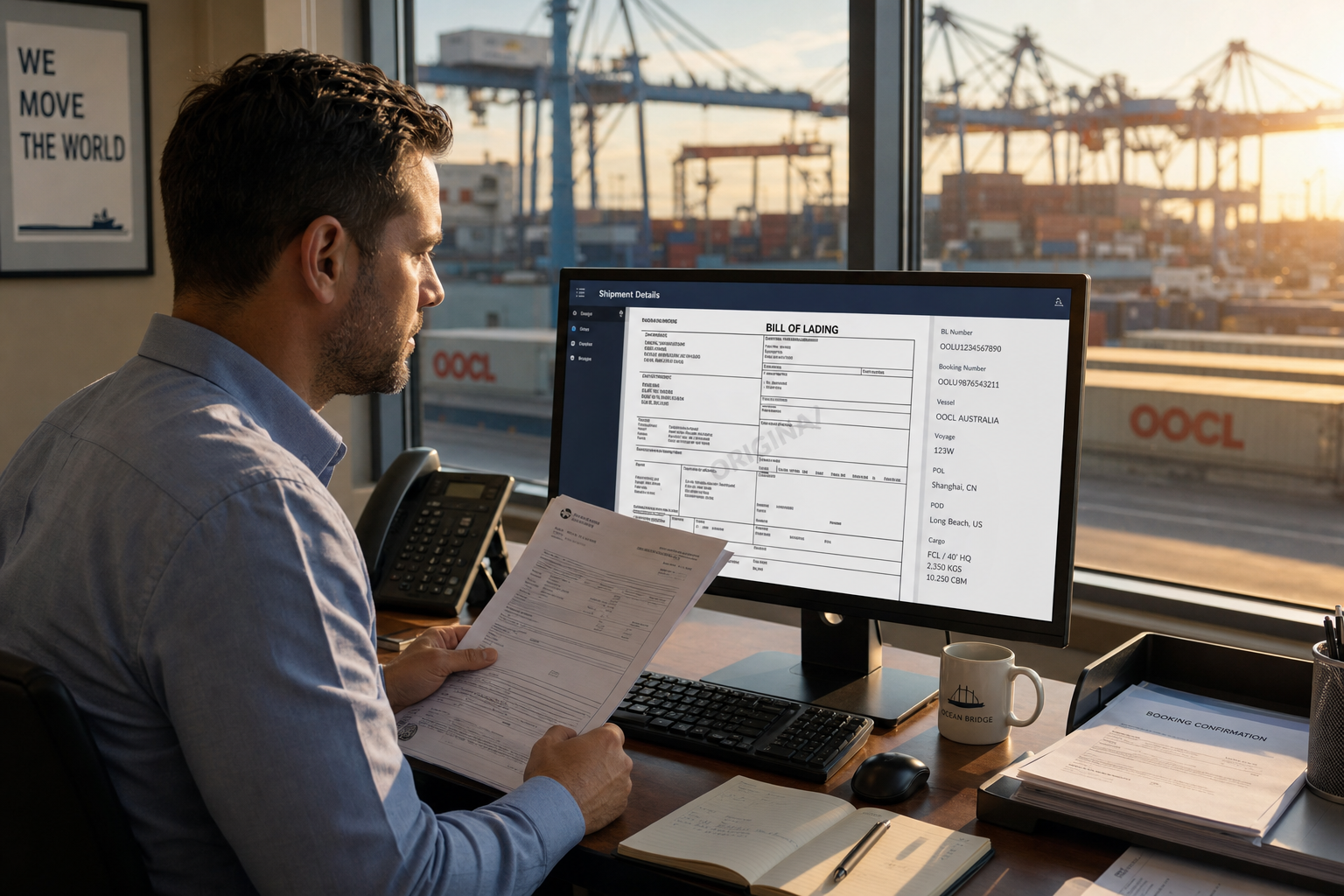
A container of automotive parts sits on the tarmac at an EU airport, destined for a production line in the United States. The customer’s assembly plant is running a tight, just-in-time schedule. But the shipment isn't moving. The commercial invoice lists the net weight, but the packing list shows the gross weight, and the two values are off by 25 kilograms—the weight of the pallet they sit on. This tiny discrepancy, a simple copy-paste error made by a junior logistics coordinator, creates a 72-hour customs hold. The delay forces the customer to halt a production line, triggers penalty clauses in the supply contract, and costs the exporter €150,000 in emergency air freight for a replacement shipment. The original container, when finally released, incurs demurrage fees that wipe out the profit on the entire order. This is not a hypothetical. It happens every day.
The Anatomy of a Stuck Shipment
No shipment is ever held for one big, dramatic reason. It is held for a series of small, mundane failures that cascade into a major problem. Customs authorities are not looking for reasons to be difficult; they are looking for perfect consistency. When the story told by the commercial invoice, the packing list, the certificate of origin, and the export declaration do not align perfectly, it raises a flag. That flag triggers a manual inspection, and the clock starts ticking.
The problem is that the data required for these documents lives in different parts of the business. Product weights and dimensions are in the inventory management system. Prices are in the quoting engine or order book. Customer details are in the CRM. Harmonised System (HS) codes might be in a spreadsheet on a compliance officer’s desktop. Each time a document is created, this data is manually transcribed or copied. Every manual touchpoint is an opportunity for error—a zero dropped, a unit of measure confused, an outdated customer address used.
The Five Familiar Felons
Across thousands of delayed shipments, the same errors appear with painful regularity. These are not exotic compliance failures; they are the basics, done incorrectly.
- Incorrect HS Codes. This is the most common and costly mistake. The Harmonised System code dictates duty rates, licensing requirements, and restrictions. A single digit off can shift a product into a different tariff category, leading to underpayment of duties (which invites fines and audits) or overpayment (which erodes margin). Many businesses rely on codes provided by their overseas suppliers, forgetting that these may not be valid for the destination country or may be based on outdated information. The responsibility for the correct code always rests with the exporter.
- Value Discrepancies. The declared customs value on the commercial invoice must be precise. It is not just the price of the goods; depending on the Incoterm used, it may need to include costs for freight and insurance. Undervaluing goods to reduce duties is illegal and easily caught. Overvaluing them by mistake simply gives away margin. Common mistakes include inconsistent use of discounts versus credits or failing to align the invoice value with the value on the export declaration.
- Inconsistent Descriptions. The description of the goods must be identical across all documents. A commercial invoice that says “Model 2B Actuator” while the packing list says “Industrial Actuator, 24V” creates ambiguity. Customs officials need clear, specific descriptions, not internal model names or marketing copy. This inconsistency is a primary trigger for inspections.
- Missing or Flawed Origin Declarations. Preferential duty rates under Free Trade Agreements (FTAs) depend on a valid certificate of origin (e.g., EUR.1) or a correctly worded origin statement on the invoice. Forgetting to include the exporter's REX number, using the wrong wording, or failing to prove the goods actually qualify under the rules of origin will lead to the denial of the preferential tariff. The importer is then hit with the full, non-preferential duty rate, and the exporter gets the angry phone call.
- Incoterms Confusion. Misunderstanding or misstating the Incoterm is a frequent source of disputes. Stating "CIF" without naming the port of destination, for example, makes the term meaningless. The chosen Incoterm defines who is responsible for the goods, insurance, and freight at every stage of the journey. Ambiguity here leads to unexpected costs and arguments over liability when something goes wrong.
The Spreadsheet is the Accomplice
Why do competent, experienced teams make these fundamental mistakes? Because their tools and processes make errors almost inevitable. Most export departments are still run on a combination of spreadsheets, Word templates, and emails. This manual assembly line for critical documents is the root of the problem. A change in product weight in the master ERP is not automatically reflected in the export team’s templates. A new price agreed by the sales team might not make it to the final commercial invoice. The process relies on human diligence, which is fallible by definition.
The system forces people to re-enter the same information in multiple places, violating the most basic principle of data management. This is not a training issue. You cannot train a person to never make a typo. The only way to solve the problem is to eliminate the possibility of error by design.
A 2023 report by DHL found that 83% of logistics professionals cite customs clearance issues as a top cause of international shipping delays. This is not a reflection on customs authorities; it is a reflection on the quality of the data they are being given.
Regulatory Scrutiny is Increasing
The environment for exporters is not getting easier. The Union Customs Code (UCC) is undergoing its most significant reform since 1968, moving towards a fully digital, data-driven system. This means more data points will be required and systems will automatically flag inconsistencies that a human officer might have once overlooked. Furthermore, as of July 2026, the EU has removed the €150 duty exemption for low-value parcels, meaning all goods now require full customs processing and will be subject to duties. This change is designed to level the playing field for EU businesses but also means millions more declarations will be filed, each one a potential point of failure for the unprepared exporter.
Systems Thinking for Export Compliance
The solution is to stop treating documentation as a separate, final step. It must be an automatic consequence of the export process itself. When all your operational data resides in a single, unified platform—from product specifications in Inventory Management to customer and pricing data in your sales modules—the potential for transcription errors vanishes. The commercial invoice, packing list, and export declaration are not created manually; they are generated from the same source data that runs your warehouse and your accounts receivable.
A platform with a dedicated Global Trade Compliance engine can validate HS codes against country-specific rules, calculate landed costs based on the correct Incoterm, and ensure that the certificate of origin is only generated for qualifying goods. The human operator’s role shifts from data entry clerk to exception manager, focusing only on the shipments that the system flags for review.
The Real Cost
The trap is not the fine or the demurrage charge. The real cost is the operational chaos, the emergency meetings, the damaged customer trust, and the management attention diverted from growing the business to fighting fires. It is the slow, grinding inefficiency of a process that treats critical compliance as low-value admin. The paperwork is not the problem. It is the symptom. The problem is a disconnected, manual data process that is no longer fit for purpose in a world of tightening regulations and unforgiving supply chains.
Response365 Export Planner
Stop managing exports with spreadsheets and email. The Response365 Export Planner generates all 12+ required document types from a single, unified database that connects your sales, inventory, and finance modules. Define market-entry pipelines, assess readiness, and ensure every HS code, price, and batch number is correct on every shipment, every time.