Analysis and practical thinking on AI, business intelligence, and modern operations.
The planning fallacy is well-documented: people consistently underestimate time, cost, and risk. In project management, that bias compounds — and it costs the average mid-market business 23% of project value.
Allergen-related recalls account for 40% of all EU food safety alerts. In most cases, the allergen was known — the failure was in label control and production record accuracy.
Cold email open rates dropped below 8% in 2025. Social selling isn’t the replacement — but it is part of a two-channel approach that is working for teams that use it correctly.
Most LMS deployments are tracked by completion rate. The businesses getting real returns are measuring something harder: speed to competence and reduction in operational error rates.
Three years ago, owning your channel was optional. Today, a brand that cedes distribution entirely to marketplaces has lost pricing power and customer data permanently.
The CSRD reporting obligation is not primarily a reporting problem. It is a data collection problem — and most companies are only now discovering how fragmented their sustainability data is.
Two weeks of each quarter lost to inter-company elimination, currency translation, and reconciliation across subsidiaries. This is a solved problem — just not widely.
IT support costs are easy to see. The business cost of IT downtime, waiting, and workarounds is harder to quantify — and usually three times larger.
A single error on a commercial invoice can hold a shipment for 72 hours. Most EU exporters make the same five mistakes — repeatedly.
When large manufacturers commoditised, small ones went custom. The businesses winning on bespoke production have one thing large competitors can’t easily copy: operational flexibility.
The EU Deforestation Regulation requires food companies to map their supply chains to the plot of land. For most, that is a capability they don’t yet have.
A 98% inventory accuracy rate sounds good. But on 10,000 SKUs it means 200 ghost items — and the downstream cost of those errors touches every part of the business.
Gut-feel forecasting works until it doesn’t. The companies that survived 2022–2025’s volatility had one thing in common: a data model that updated weekly.
In most warehouses, pickers walk 12–15 km per shift. Less than half of that distance adds value. The gap is route design — and it is fixable.
We are a SaaS vendor. We host your data. The difference is not whether your data lives in someone else's infrastructure — it does, with us and everyone else. The difference is what surrounds your ability to take it back.
Every CRM ever built assumes you stop doing business to record it. Four hours after the order, from memory, into twelve fields. The form was always the bug.
Most CRM and ERP migrations fail not at the technical layer but at decisions made months before the first record moves. The delay problem, the clean-data trap, parallel running, and what actually makes a migration work.
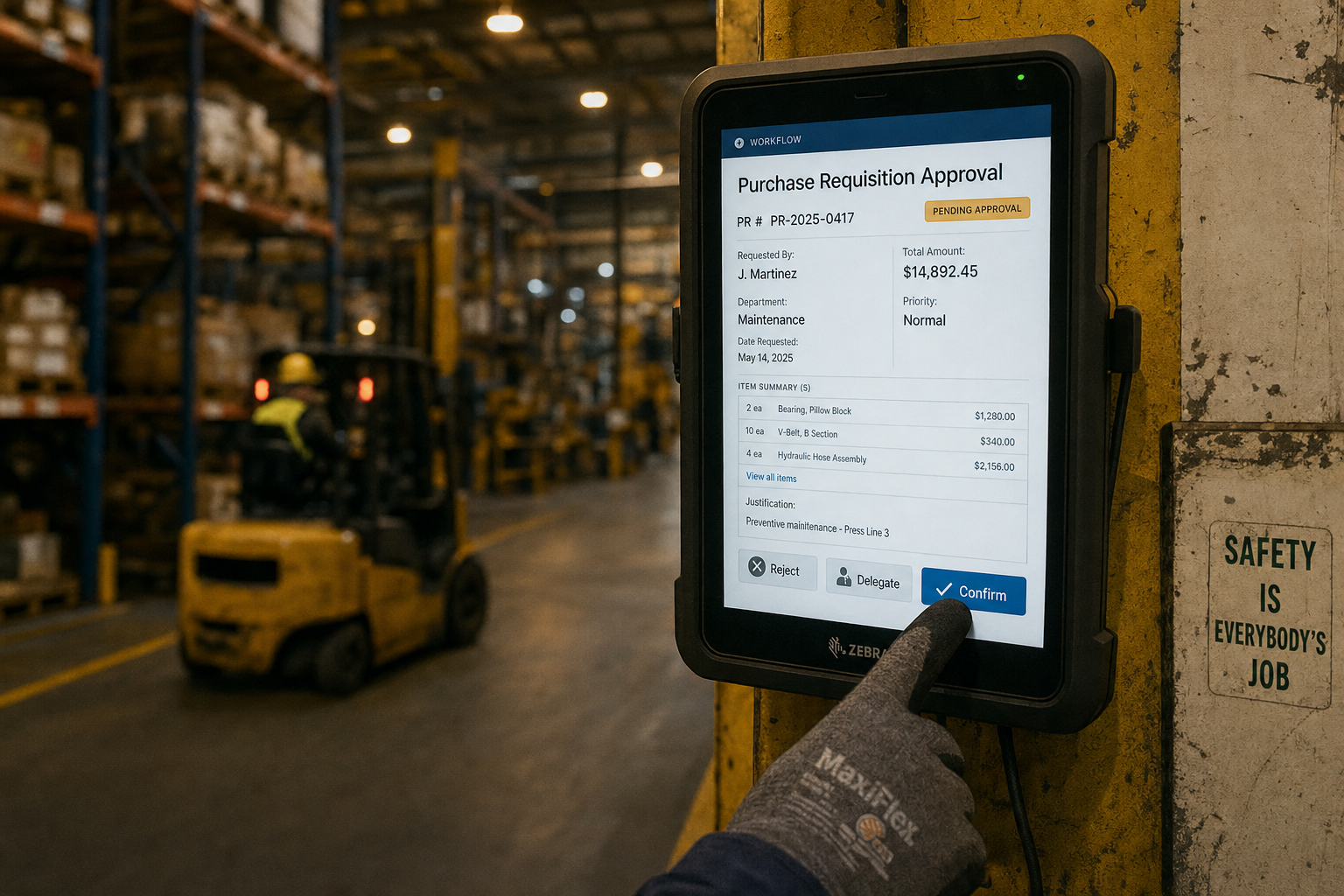
A purchase order that takes eight days to approve costs more than its approval is worth. How procurement bottlenecks silently inflate operational spend.
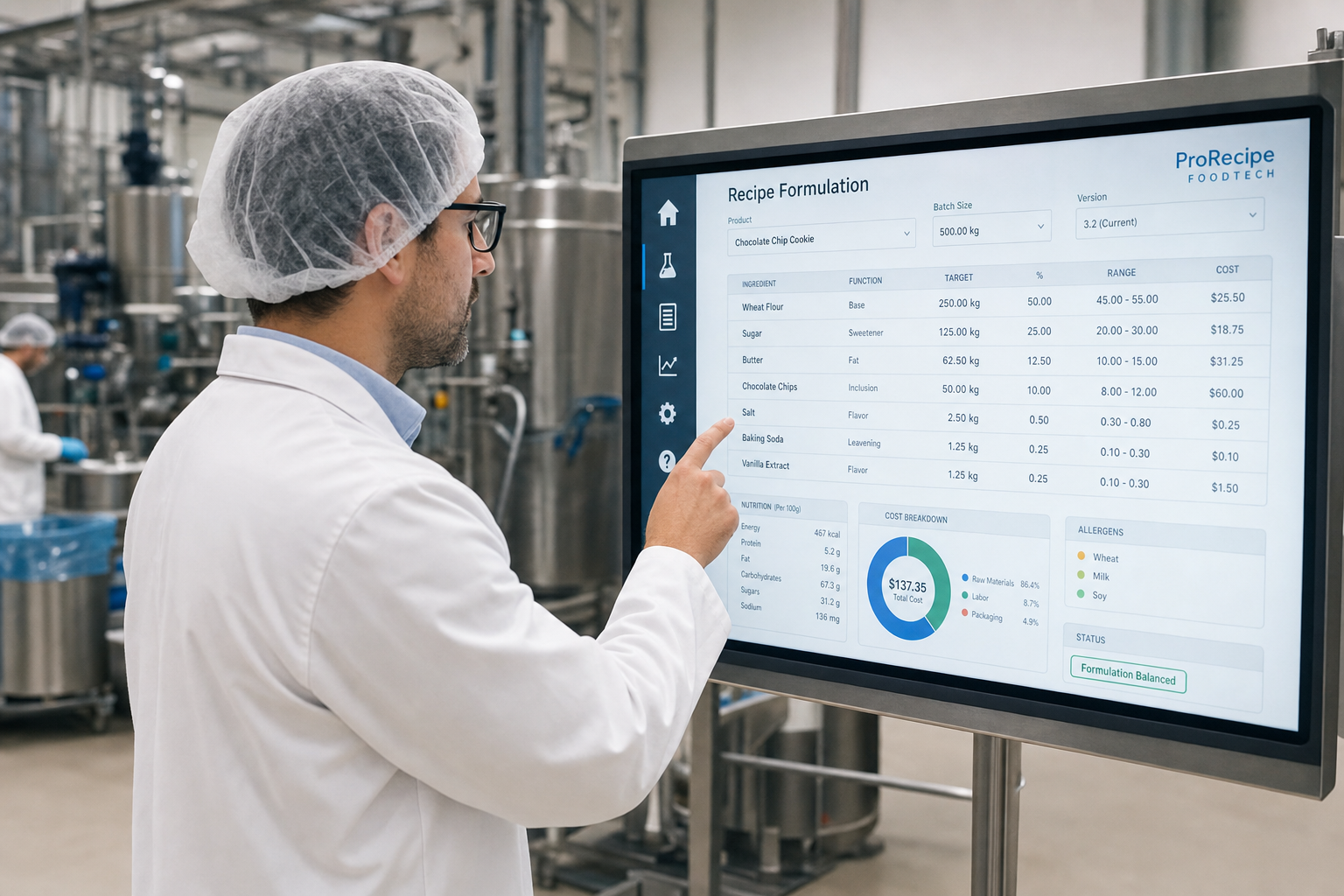
Spreadsheet recipes break when you scale. Version control breaks when you change an ingredient. Allergen compliance breaks when you forget to update the label. Here is what purpose-built recipe management actually solves.
Brazil is the world's largest net food exporter — a position built on scale and three decades of investment. But for food manufacturers operating in or trading with the Mercosur market, the compliance landscape is routinely underestimated: three distinct regulatory pillars must all be satisfied before a single pallet moves.
Most businesses have no single view of when contracts expire, what they commit to, or what they pay. The cost of that gap compounds silently every quarter.
From pivot tables to plain-language questions: why the 30-year-old reporting paradigm is finally breaking, and what replaces it.
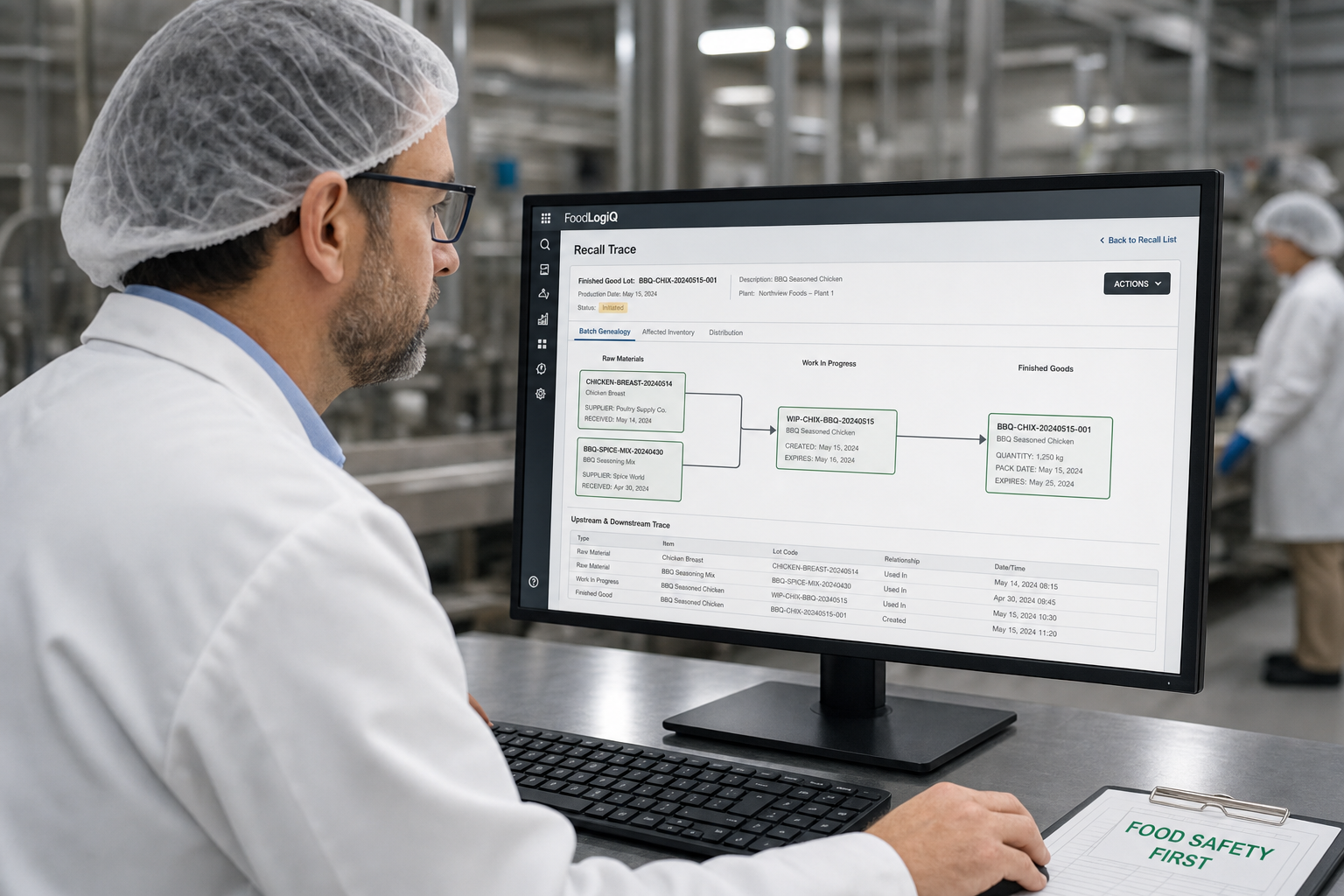
A product recall that takes hours instead of days starts with one decision made years earlier: whether your production records and your ERP share the same database.
The subscription bill is the smallest part. What fragmented business software actually costs your organisation.
Farm to Fork, EUDR, and Digital Product Passports are converging on food producers. Paper-based systems won’t survive.
Cold outreach is saturated. Here’s the signal-based, multi-threaded approach that’s replacing it.
Most service businesses handle bookings in one system and invoicing in another. The gap between the two is where revenue leaks, disputes start, and admin hours disappear.
Revenue is a vanity metric. What true product profitability analysis reveals — and why most businesses don’t know their real margins.
Nearshoring, supplier diversification, and demand-driven planning are no longer premium strategies — they are table stakes.
The CSRD has made sustainability reporting a statutory obligation — and the data collection challenge is far bigger than most anticipated.
Most CRM rollouts follow a predictable arc: careful launch, then slow abandonment. Here is why — and what the systems that stick have in common.
Speed of response optimised for the wrong thing. The metric that actually predicts retention is whether you solved it first time.
Reporting tells you what happened. Forecasting tells you what happens next. Here is where the gap costs most businesses the most.
The standard price list is a 1970s tool. Most mid-market B2B companies still run on one — and lose margin, deals, and customer trust as a result.
Most food manufacturers still document batches on paper. That trail worked for decades — until regulators started asking for it in real time, and recalls required instant genealogy.
The average B2B sales team uses four separate tools between first contact and paid invoice. Each handoff is a place where leads slip, data corrupts, and margin disappears.
Purchased lead databases decay at 30% per year. The freshest, most complete registry of businesses in the world is not in a data vendor's warehouse — it's on a map.
Temporary staffing agencies run on thin margins. The ones that stay profitable know their margin per placement in real time — not at month end when it is too late to act.
Response365 BI is built into your ERP — not bolted on. Ask questions in plain language across every business module.