

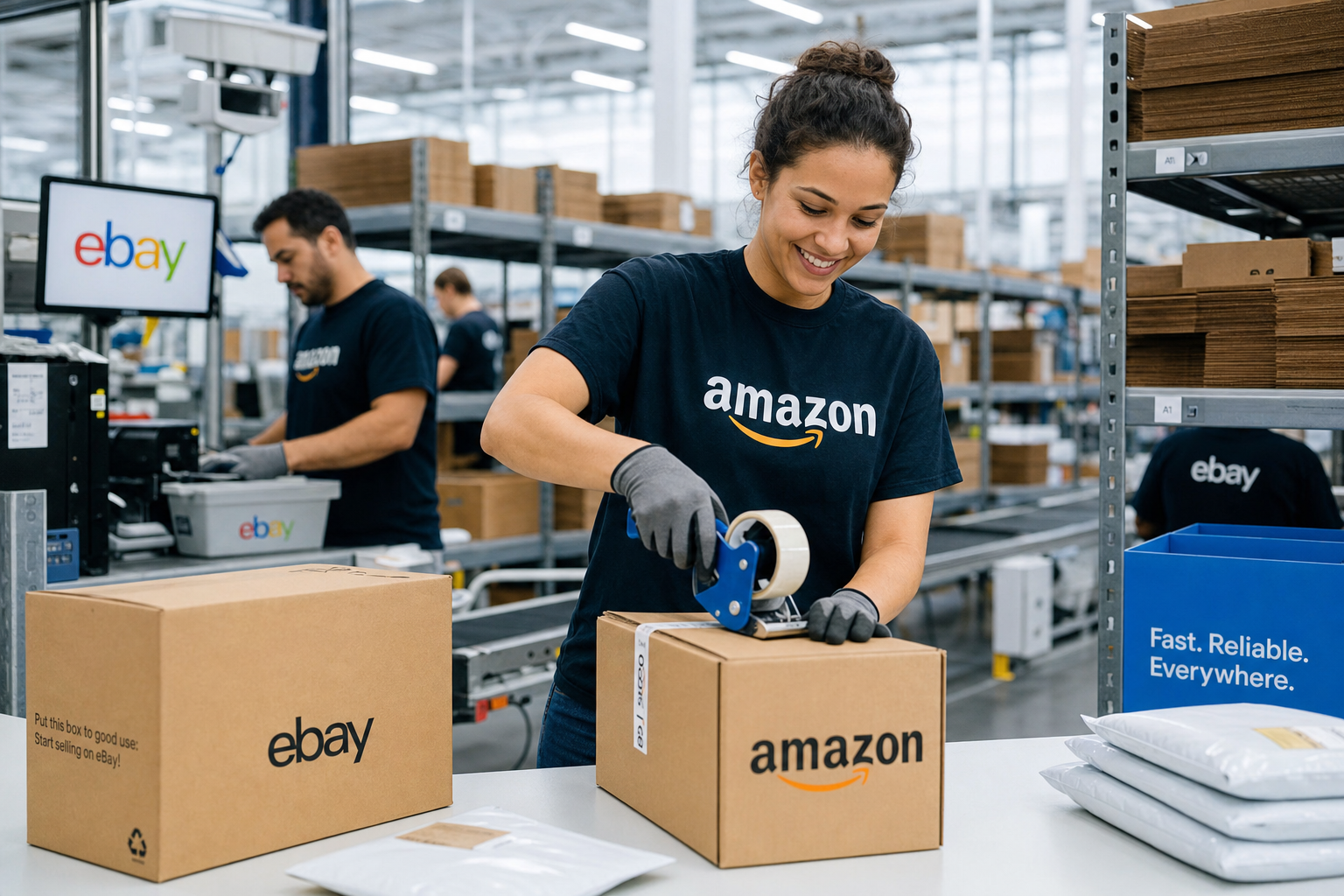
The finance director for a mid-sized kitchenware brand stared at the Q2 report. Sales on Amazon were up 18%. The company's net margin, however, had fallen by three full points. The culprit was hidden in plain sight: a line item for 'marketplace fees and advertising' that now consumed almost a quarter of their gross profit. They were selling more units than ever and simultaneously racing to the bottom. This isn't a hypothetical scenario; it's the lived reality for thousands of brands who took the marketplace deal and are only now counting the cost.
The Devil's Bargain
The appeal was, and is, seductive. Marketplaces offer a turnkey solution to the hardest problems in commerce: traffic and logistics. A new brand can gain national, even global, reach in weeks, plugging into a river of customers it could never afford to attract on its own. The infrastructure for warehousing, picking, packing, and shipping is already built. It feels like a shortcut to scale.
But this convenience is a loan, and the interest payments are brutal. The fees are the most visible cost, with commissions of 10-20% being standard before you even consider advertising, fulfilment, and storage charges. These costs are not static; they are levers the marketplace can pull at any time. A change in an algorithm or a new fee structure can wipe out a product line's profitability overnight.
For years, the accepted wisdom was a hybrid approach: use marketplaces for discovery and a direct-to-consumer (D2C) site for loyalty and margin. That strategy is now failing. The centre ground has collapsed. The gravity of the major platforms is so immense that they are no longer just a channel; they are the market itself for many product categories. Brands that treat them as a simple sales outlet are making a category error with existential consequences.
Pricing Power Is an Illusion
On a marketplace, you do not control your price. You may set a list price, but the effective price is determined by a brutal, algorithm-driven environment. Competitors, both legitimate and unauthorised third-party sellers, create constant downward pressure. The platform's own mechanics, from the 'Buy Box' algorithm to its promotional events, are designed to favour volume and low prices above all else.
This forces brands into a promotional death spiral. To gain visibility, you must participate in platform-wide sales. To win the sale, you must advertise. To afford the advertising, you must have the margin. But to have the margin, you need pricing power, which the platform has already taken from you. It is a closed loop from which few escape.
The result is the widespread commoditisation of brands that have spent years, and millions, on building equity. The customer's relationship is with the marketplace's convenience (e.g., Prime delivery), not with your product's quality. You become just another searchable line item, stripped of story and context.
Your Customer Is Not Your Customer
This is the single most dangerous part of the bargain. When a sale happens on a marketplace, the platform owns the customer. They own the name, the email, the behavioural data, the purchase history, and the path to the next sale. The brand, the company that actually designed, manufactured, and funded the product, receives a heavily redacted order file. You are reduced to a fulfilment node.
Without first-party data, a business cannot build lasting relationships. You cannot segment your audience, personalise communications, or calculate a true customer lifetime value. You are permanently renting an audience instead of building an asset. This is not a sustainable model. A business without a direct line to its customers is a business with no moat. While US D2C sales are projected to reach nearly $240 billion in 2025, the real value is in the direct data and relationships these sales represent.
According to Marketplace Pulse data, the average profit margin of Amazon's top sellers fell below 10% in 2023. In the same period, the average profit margin for merchants on Shopify, a D2C platform, remained between 22% and 35%.
The Counter-Offensive: Reclaiming the Channel
Leading operations and finance executives are no longer asking *if* they should reduce their marketplace dependency, but *how*. The retreat from platform serfdom is underway, and it follows a clear pattern. The goal is not just to sell directly, but to build an ecosystem you control.
First, they are re-investing in the D2C experience. This is more than just a web shop. It means unifying the entire operational stack. When your E-Commerce platform, CRM, and Inventory Management run on a single database, the experience changes. A customer service agent can see a caller's complete order history and credit status before saying hello. Marketing can build dynamic segments based on real-time purchase behaviour, not stale data synced overnight. Inventory levels on the website are always accurate because they reflect the same reality as the warehouse floor. This is the baseline for a competitive direct channel.
Second, the most ambitious brands are flipping the script entirely. Instead of just being another seller on a giant marketplace, they are building their own curated marketplaces. A premium cookware brand, for example, can invite sellers of artisanal olive oil, high-end cutlery, and specialty spices to sell on its platform. They use their brand gravity to attract an audience, and then offer that audience a wider, but still curated, selection of complementary products. This is the ultimate strategic response.
Becoming the Platform
This is no longer a theoretical option reserved for giants. The technology to operate a multi-vendor marketplace is now accessible. With a platform like Response365, a brand can manage the entire vendor lifecycle, from onboarding and catalog approval to commission calculation and payouts. A single checkout can automatically split an order between the brand's own warehouse and multiple third-party vendors, while tracking service-level agreements for each.
This transforms the business model. It creates new, high-margin revenue streams from commissions. It increases customer loyalty by offering a more complete solution. Most importantly, it generates a torrent of proprietary data about what products are selling together and to whom. You move from being a participant in a market to being the owner of the market. You regain control over the customer relationship and the economic terms of your own distribution.
There Is No Middle Ground Left
The era of casual experimentation with marketplaces is over. The platforms have matured, their fees have risen, and their control over the customer relationship is absolute. For any brand that manufactures a physical product, the choice today is binary.
You are either building a direct, data-rich relationship with your end customer, or you are resigning yourself to being a low-margin supplier to a platform that will. The hybrid model was a temporary bridge, not a destination. The brands that thrive in the next decade will be the ones who understood that the distribution channel is the brand.
Become the Marketplace
Stop being a supplier on someone else's platform. Response365's Marketplace module provides the tools to build your own multi-vendor ecosystem — from vendor onboarding and split-order logic to commission management and SLA tracking, all on the same unified platform as your CRM and ERP.